



G. David Felt
Premium Subscriber
-
Joined
-
Last visited
Everything posted by G. David Felt
-
One has to wonder how many launch edition EVs will get destroyed by people lacking attention to how fast they are and having an accident. https://www.autoevolution.com/news/we-waited-years-for-the-rivian-r1t-to-launch-but-someone-crashed-it-after-just-200-miles-198512.html
-
Very interesting story on Ford. Will be interesting to see how it plays out. https://www.cnbc.com/2022/09/14/ford-outlines-ev-investment-structure-for-its-dealers-as-it-chases-tesla-like-profit.html https://www.cnbc.com/2022/09/14/watch-live-biden-touts-electric-vehicles-at-the-detroit-auto-show.html First round of funds to start construction on the 500,000 charging stations in 35 states. Question I have is why not all states?
-
-
@oldshurst442 Glad you like it, I have been once, more than enough for my lifetime. Not really a city person, so could care less if a second one ever gets built. Though with that statement, I would have to say that I have never understood the attraction to dense city living. Rather live in the woods, but the wife likes her shopping mall and so suburban living on a 1/3rd of an acre lot size is for me. At least I have space.
-
I get that there are Monarchy things, but on thinking on this since you posted it, I still do blame Charles. I agree that Diana parents FAILED her as parents as a 16 year old should have never been involved with a 30 year old. @ 32 years of age, he knew better on how to behave as a man, husband, father. He still fails his own sons in what we have seen in both the European and North American News IMHO and the Skank wife of his I leave it at that, a SKANK! Hi mom was a steady hand for the country but also one could say a failure as a mother to her own son and should at least by the age of 80 seen that and made better plans than to allow him to become king. Prince William will be a better husband, father and king than his dad ever will be and I hope his dad has a short time on the throne. Meh to the crapy Audi's and Meh to the tower. Solemn place to visit, but I feel they could have done better than that one building.
-
We start off with the joint production plant of GM/LG Energy Solutions opening up for production of Ultium Cells in this 2.8 million-square-foot site. This site was planned for production to begin by late 2022. May 2020, ground was broken, steel construction begun and by February 2021 the steel was topped out. Officially prototype battery cells were started in February 2022, but as of September 6th, 2022, the plant had an official ceremony with state, county and city officials along with GM and LG at this site along Route 45 in Lordstown. This site has 800 employees and is expected to grow to 1,100 by late 2023 when in full production mode as this plant will supply the battery packs for the Hummer EVs, Chevrolet Silverado EV Pickups and the Cadillac LYRIQ electric SUV line. GM is on track to move to a full EV portfolio by 2035, a mere 12 years away. Demand for workers will continue to grow in this region as GM will be expanding as they have Ultium Plants 2 & 3 under construction. As of this morning September 12, 2022, Ultium Cells LLC has confirmed they are developing the business case to build a 4th plant a mere 15 miles away in New Carlisle, Indiana. This process is currently moving forward with the local officials and GM with all approvals on track for later this month as GM/LG secure a tax abatement. This will be the 4th $2 Billion-dollar Ultium Cells production site. This 4th production site will add to the current 3 sites that has GM on track to produce 1 million plus EVs in North America by the end of 2025. This is all part of the GM plan for a carbon neutral auto company by 2045 under the direction of CEO Mary Barra. Keep in mind that competition for workers will be strong in this area as Honda and LG Energy Solutions has announced their first battery production site in Mahoning Valley, Ohio. GM's first Ultium production site will produce 35+ GWh a year by the end of 2023, producing millions of Nickel Cobalt Manganese Aluminum (NCMA) large-format, pouch-style cells per year. This site is the equivalent size of 30 football fields. GM has stated that every plant has room to expand production by double if not triple the current planned output. All total you have the following joint battery cell production sites: Plant 1: Warren, Ohio Ultium Cell site Battery Pouch Official Production started September 2022 Prototype production since February 2022 2.8 million sq-ft 1,100 employees estimated 35+ GWh production, capable of expanding Cost $2 billion Plant 2: Spring Hill, Tennessee Ultium Cell Site Battery Pouch Production to begin by late 2023 Final beam installation happened August 2022 2.8 million sq-ft Estimated 1,300 employees when in production 40+ GWh production, capable of expanding Cost $2.3 Billion Plant 3: Lansing, Michigan Ultium Cell Site Battery Pouch Production to begin by 2024 Steel topping out estimated spring 2023 Plant has been announced to produce battery cells for all Chevrolet and GMC EV truck production. 2.8 million sq-ft 1,700 employees estimated 50+ GWh battery pouch production, capable of expanding Cost $2.7 Billion Plant 4: New Carlisle, Indiana Ultium Cell Site Battery Pouch Production start N/A 2.8 million sq-ft Employee Estimated N/A 50+ GWh battery pouch production, capable of expanding, GM/LG will not confirm or deny this size at this time Estimated Cost $2 Billion All total, GM has a confirmed 125+ GWh battery pouch production of cells for their EV portfolio either online now or coming online by 2024. Tesla being the king currently in EV production needs to be watching over their shoulder as current production of EVs globally has Tesla at 20 GWh of cell production, though their CEO has stated they are producing much more than that as they continue to ramp up Germany, China and the California and Texas production sites. Keep one thing in mind, as Tesla does produce 35 GWh of cells in Nevada, only 1/3 is used in auto production and the rest based on reports goes to residential and commercial power walls and their solar roof with storage solutions. Big challenge for everyone is the critical raw materials for these battery cells be they pouch design or hard circular battery shape. GM's Electric Vehicle portfolio as of today pretty much has amounted to the BOLT, BOLT EUV, Hummer EV Truck and Cadillac LYRIQ. Yet there are plenty more coming and these will not be six figures as most companies are selling right now for an EV. Just recently revealed was the Chevrolet Equinox EV. This is their starting point for today as a compact 1LT EV, this Equinox will start at $30,000 according to GM in a front-wheel-drive (FWD) format. Though Chevrolet is allowing folks to build to order in ways that were last seen 40 plus years ago in regard to the fact that while a 1LT is the entry point in FWD, you can add a bigger battery pack or AWD to this auto beside an Alacarte assortment of options. Trim on the Chevrolet Equinox EV is as follows: To quote their press release: Electrifying capability A standard front-wheel-drive system with GM estimated 210 horsepower and 242 lb-ft of torque offers quick acceleration and a fun driving experience for everyday tasks, with a 290-horsepower and 346 lb-ft torque eAWD system available. One-Pedal Driving5 is standard and allows the Equinox EV to accelerate and slow to a full stop, using only the accelerator. It’s paired with regenerative braking6, which can convert the kinetic energy of the vehicle’s forward momentum into electricity that’s stored in the battery pack to maximize the driving range. The Equinox EV also packs the latest in charging technology: Standard 11.5 kW Level 2 (AC) charging, which can add up to 34 miles of range per hour of charging, per GM estimates 19.2 kW Level 2 (AC) charging is available on 3RS eAWD, which can add up to 51 miles of range per hour of charging, per GM estimates Standard DC fast-charging capability of up to 150 kW, which enables approximately 70 miles of range to be added in 10 minutes, per GM estimates GM covers the Equinox EV’s battery with an 8-year/100,000-mile limited warranty, in addition to the vehicle’s standard bumper-to-bumper coverage for added peace of mind. Chevrolet is also offering the following standard safety features: Chevy Safety Assist, which includes Automatic Emergency Braking, Following Distance Indicator, Forward Collision Alert, Front Pedestrian Braking, Lane Keep Assist with Lane Departure Warning and IntelliBeam automatic high beams Rear Park Assist Reverse Automatic Braking Safety Alert Seat Rear Cross Traffic Braking Blind Zone Steering Assist Available safety options are Adaptive Cruise Control, HD Surround Vision, Heads-Up Display, Rear Camera Mirror and Super Cruise. Here is one way a 3LT could look: You then move to top line trim in the 3RS: Here is the complete list released by trim level for the Chevrolet Equinox: Trim Select Content Details 1LT Manual-adjust front seats 11-inch-diagonal infotainment3 screen 11-inch-diagonal driver information center 19-inch machine-face aluminum wheels 2LT 8-way power-adjustable driver seat Heated front seats and heated steering wheel Available Black with Blue Accents interior or Sky Cool Gray interior Available 17.7-inch-diagonal infotainment3 screen 11-inch-diagonal driver information center 19-inch machine-face aluminum wheels Front LED light bar Roof rails Heated outside mirrors Available presence-based power liftgate Available Adaptive Cruise Control9 and HD Surround Vision9 Available Super Cruise4 driver assistance technology Available White roof with Blue exterior Available sunroof 2RS 8-way power-adjustable driver seat Heated front seats and heated steering flat-bottom wheel Available Black with Red Accents interior or Adrenaline Red interior Available 17.7-inch-diagonal infotainment3 screen 11-inch-diagonal driver information center 20-inch dark aluminum wheels Front LED light bar Roof rails Heated outside mirrors Available presence-based power liftgate Available Adaptive Cruise Control9 and HD Surround Vision9 Available Super Cruise4 driver assistance technology Available Black roof Available sunroof 3LT 8-way power-adjustable driver seat and 6-way power-adjustable front passenger seat Front heated/ventilated seats and rear outboard heated seats Available Black with Blue Accents interior or Sky Cool Gray interior Heated steering wheel Dual-zone climate control Heated wiper park 17.7-inch-diagonal infotainment3 screen 11-inch-diagonal driver information center Available head-up display and full-display camera mirror (with rear washer) Available Bose audio system Available sunroof 21-inch aluminum wheels Front LED light bar Roof rails Heated outside mirrors Standard presence-based power liftgate Standard Adaptive Cruise Control3 and HD Surround Vision3 Available Head-Up Display and Rear Camera Mirror3 Available Super Cruise4 driver assistance technology 3RS 8-way power-adjustable driver seat and 6-way power-adjustable front passenger seat Front heated/ventilated seats and rear outboard heated seats Available Black with Red Accents interior or Adrenaline Red interior Heated flat-bottom steering wheel Dual-zone climate control Heated wiper park 17.7-inch-diagonal infotainment3 screen 11-inch-diagonal driver information center Available Head-Up Display and Rear Camera Mirror9 (with rear washer) Available Bose audio system Available sunroof 21-inch aluminum wheels Front LED light bar Roof rails Heated outside mirrors Standard presence-based power liftgate Standard Adaptive Cruise Control9 and HD Surround Vision9 Available Super Cruise4 driver assistance technology Available 19.2 kW Level 2 (AC) charging module7 Chevrolet Equinox EV 3RS While we have the two sub-Compacts BOLT and BOLT EUV, we cannot forget that Chevrolet has already announced their mid size EV, the Chevrolet Blazer. Full details can be seen here: Then we have the full-size Chevrolet Silverado EV truck: Course one could not forget that we have the Hummer by GMC. 1,000 HP and 11,500 lb-ft of torque We then have the luxury segment where Cadillac has their first EV to start the transition over the next few years to a complete EV portfolio. Welcome the Cadillac LYRIQ: It would seem that based on the current level of change that GM is sitting well in the game to change to a green portfolio of electric vehicles. The next couple of years as more and more models come out will show options that others probably have not thought about. Yes, for some the charging network is still not vast depending on where one lives, yet it is growing monthly with investments from the government, auto companies and private charging companies that are stepping up their game. One area that we have not touched on is Charging. Many say it is way to bothersome to go electric when you have to sit for so long to get recharged. Others say it is like using your cell phone, you come home and plug it into a 220V wall charger and have a full battery pack in the morning. The counter point here is that some say not everyone will pay to have a 220V 50 amp wall charger installed at their home. The idea has always been charging as fast as gas. It would seem the brains at Idaho National Laboratory presented at the American Chemical Society (ACS) Fall 2022 meeting claims they could significantly increase the amount of power is pushed into a battery cell. Super-fast electric car charging, with a tailor-made touch - American Chemical Society (acs.org) The end result was tailored made methods of charging one's battery pack to full in 10 minutes or less without battery damage or shorter life. The ultimate goal is for the electric vehicle to tell the charging station how to power up their specific batteries quickly and safely. News | Ultium Cells LLC Ultium Cells Welcomes Ohio Governor Mi... | Ultium Cells LLC GM, LG Energy Solution considering Indiana for fourth U.S. battery plant | Reuters The start of EV battery production is great news | News, Sports, Jobs - Morning Journal (morningjournalnews.com) Warren OH Location | Ultium Cells LLC (8) Welcome, Chevrolet Equinox EV! | LinkedIn Equinox EV (chevrolet.com) 2024 Equinox EV: An Affordable, Functional and Stylish EV (chevrolet.com) All-Electric 2024 Chevrolet Blazer EV Reimagines Customer Choice, Performance, Design (gm.com) Committing to an All-Electric Future | General Motors (gm.com) GM joint venture Ultium Cells considers new battery plant in Indiana (freep.com) Can Tesla Meet 2022 Goals For In-House Battery Production? (lithium-news.com) 2024 Equinox EV: An Affordable, Functional and Stylish EV (gm.com) Blazer EV (chevrolet.com) 2024 Chevrolet Blazer EV PPV Ready for Patrol All-Electric 2024 Chevrolet Blazer EV Reimagines Customer Choice, Performance, Design Committing to an All-Electric Future | General Motors (gm.com) First-Ever Silverado EV: Electric Truck | Chevrolet Introducing the GMC HUMMER EVs | Electric Truck & SUV 2023 Cadillac LYRIQ | Electric SUV | Model Overview View full article
-
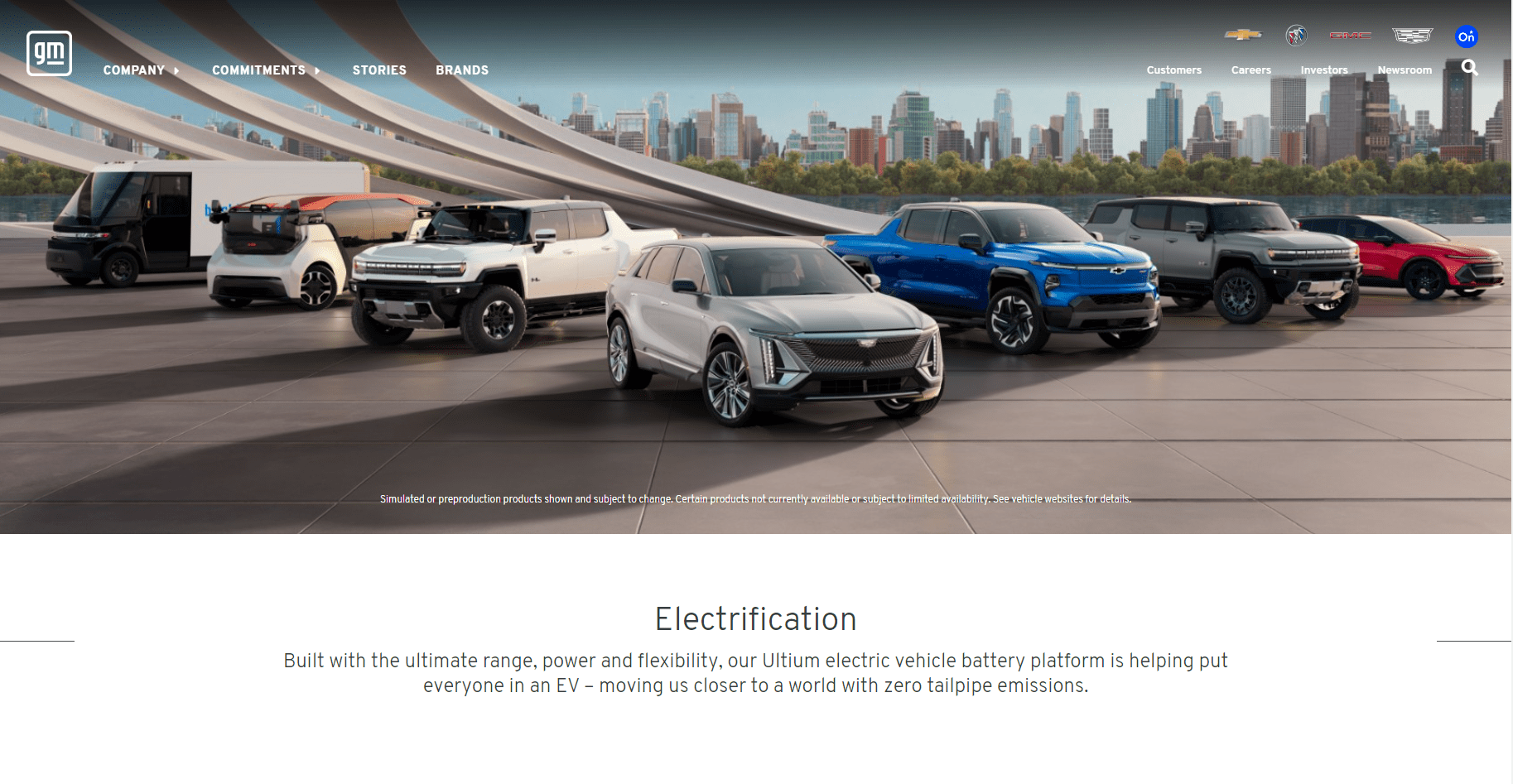 We start off with the joint production plant of GM/LG Energy Solutions opening up for production of Ultium Cells in this 2.8 million-square-foot site. This site was planned for production to begin by late 2022. May 2020, ground was broken, steel construction begun and by February 2021 the steel was topped out. Officially prototype battery cells were started in February 2022, but as of September 6th, 2022, the plant had an official ceremony with state, county and city officials along with GM and LG at this site along Route 45 in Lordstown. This site has 800 employees and is expected to grow to 1,100 by late 2023 when in full production mode as this plant will supply the battery packs for the Hummer EVs, Chevrolet Silverado EV Pickups and the Cadillac LYRIQ electric SUV line. GM is on track to move to a full EV portfolio by 2035, a mere 12 years away. Demand for workers will continue to grow in this region as GM will be expanding as they have Ultium Plants 2 & 3 under construction. As of this morning September 12, 2022, Ultium Cells LLC has confirmed they are developing the business case to build a 4th plant a mere 15 miles away in New Carlisle, Indiana. This process is currently moving forward with the local officials and GM with all approvals on track for later this month as GM/LG secure a tax abatement. This will be the 4th $2 Billion-dollar Ultium Cells production site. This 4th production site will add to the current 3 sites that has GM on track to produce 1 million plus EVs in North America by the end of 2025. This is all part of the GM plan for a carbon neutral auto company by 2045 under the direction of CEO Mary Barra. Keep in mind that competition for workers will be strong in this area as Honda and LG Energy Solutions has announced their first battery production site in Mahoning Valley, Ohio. GM's first Ultium production site will produce 35+ GWh a year by the end of 2023, producing millions of Nickel Cobalt Manganese Aluminum (NCMA) large-format, pouch-style cells per year. This site is the equivalent size of 30 football fields. GM has stated that every plant has room to expand production by double if not triple the current planned output. All total you have the following joint battery cell production sites: Plant 1: Warren, Ohio Ultium Cell site Battery Pouch Official Production started September 2022 Prototype production since February 2022 2.8 million sq-ft 1,100 employees estimated 35+ GWh production, capable of expanding Cost $2 billion Plant 2: Spring Hill, Tennessee Ultium Cell Site Battery Pouch Production to begin by late 2023 Final beam installation happened August 2022 2.8 million sq-ft Estimated 1,300 employees when in production 40+ GWh production, capable of expanding Cost $2.3 Billion Plant 3: Lansing, Michigan Ultium Cell Site Battery Pouch Production to begin by 2024 Steel topping out estimated spring 2023 Plant has been announced to produce battery cells for all Chevrolet and GMC EV truck production. 2.8 million sq-ft 1,700 employees estimated 50+ GWh battery pouch production, capable of expanding Cost $2.7 Billion Plant 4: New Carlisle, Indiana Ultium Cell Site Battery Pouch Production start N/A 2.8 million sq-ft Employee Estimated N/A 50+ GWh battery pouch production, capable of expanding, GM/LG will not confirm or deny this size at this time Estimated Cost $2 Billion All total, GM has a confirmed 125+ GWh battery pouch production of cells for their EV portfolio either online now or coming online by 2024. Tesla being the king currently in EV production needs to be watching over their shoulder as current production of EVs globally has Tesla at 20 GWh of cell production, though their CEO has stated they are producing much more than that as they continue to ramp up Germany, China and the California and Texas production sites. Keep one thing in mind, as Tesla does produce 35 GWh of cells in Nevada, only 1/3 is used in auto production and the rest based on reports goes to residential and commercial power walls and their solar roof with storage solutions. Big challenge for everyone is the critical raw materials for these battery cells be they pouch design or hard circular battery shape. GM's Electric Vehicle portfolio as of today pretty much has amounted to the BOLT, BOLT EUV, Hummer EV Truck and Cadillac LYRIQ. Yet there are plenty more coming and these will not be six figures as most companies are selling right now for an EV. Just recently revealed was the Chevrolet Equinox EV. This is their starting point for today as a compact 1LT EV, this Equinox will start at $30,000 according to GM in a front-wheel-drive (FWD) format. Though Chevrolet is allowing folks to build to order in ways that were last seen 40 plus years ago in regard to the fact that while a 1LT is the entry point in FWD, you can add a bigger battery pack or AWD to this auto beside an Alacarte assortment of options. Trim on the Chevrolet Equinox EV is as follows: To quote their press release: Electrifying capability A standard front-wheel-drive system with GM estimated 210 horsepower and 242 lb-ft of torque offers quick acceleration and a fun driving experience for everyday tasks, with a 290-horsepower and 346 lb-ft torque eAWD system available. One-Pedal Driving5 is standard and allows the Equinox EV to accelerate and slow to a full stop, using only the accelerator. It’s paired with regenerative braking6, which can convert the kinetic energy of the vehicle’s forward momentum into electricity that’s stored in the battery pack to maximize the driving range. The Equinox EV also packs the latest in charging technology: Standard 11.5 kW Level 2 (AC) charging, which can add up to 34 miles of range per hour of charging, per GM estimates 19.2 kW Level 2 (AC) charging is available on 3RS eAWD, which can add up to 51 miles of range per hour of charging, per GM estimates Standard DC fast-charging capability of up to 150 kW, which enables approximately 70 miles of range to be added in 10 minutes, per GM estimates GM covers the Equinox EV’s battery with an 8-year/100,000-mile limited warranty, in addition to the vehicle’s standard bumper-to-bumper coverage for added peace of mind. Chevrolet is also offering the following standard safety features: Chevy Safety Assist, which includes Automatic Emergency Braking, Following Distance Indicator, Forward Collision Alert, Front Pedestrian Braking, Lane Keep Assist with Lane Departure Warning and IntelliBeam automatic high beams Rear Park Assist Reverse Automatic Braking Safety Alert Seat Rear Cross Traffic Braking Blind Zone Steering Assist Available safety options are Adaptive Cruise Control, HD Surround Vision, Heads-Up Display, Rear Camera Mirror and Super Cruise. Here is one way a 3LT could look: You then move to top line trim in the 3RS: Here is the complete list released by trim level for the Chevrolet Equinox: Trim Select Content Details 1LT Manual-adjust front seats 11-inch-diagonal infotainment3 screen 11-inch-diagonal driver information center 19-inch machine-face aluminum wheels 2LT 8-way power-adjustable driver seat Heated front seats and heated steering wheel Available Black with Blue Accents interior or Sky Cool Gray interior Available 17.7-inch-diagonal infotainment3 screen 11-inch-diagonal driver information center 19-inch machine-face aluminum wheels Front LED light bar Roof rails Heated outside mirrors Available presence-based power liftgate Available Adaptive Cruise Control9 and HD Surround Vision9 Available Super Cruise4 driver assistance technology Available White roof with Blue exterior Available sunroof 2RS 8-way power-adjustable driver seat Heated front seats and heated steering flat-bottom wheel Available Black with Red Accents interior or Adrenaline Red interior Available 17.7-inch-diagonal infotainment3 screen 11-inch-diagonal driver information center 20-inch dark aluminum wheels Front LED light bar Roof rails Heated outside mirrors Available presence-based power liftgate Available Adaptive Cruise Control9 and HD Surround Vision9 Available Super Cruise4 driver assistance technology Available Black roof Available sunroof 3LT 8-way power-adjustable driver seat and 6-way power-adjustable front passenger seat Front heated/ventilated seats and rear outboard heated seats Available Black with Blue Accents interior or Sky Cool Gray interior Heated steering wheel Dual-zone climate control Heated wiper park 17.7-inch-diagonal infotainment3 screen 11-inch-diagonal driver information center Available head-up display and full-display camera mirror (with rear washer) Available Bose audio system Available sunroof 21-inch aluminum wheels Front LED light bar Roof rails Heated outside mirrors Standard presence-based power liftgate Standard Adaptive Cruise Control3 and HD Surround Vision3 Available Head-Up Display and Rear Camera Mirror3 Available Super Cruise4 driver assistance technology 3RS 8-way power-adjustable driver seat and 6-way power-adjustable front passenger seat Front heated/ventilated seats and rear outboard heated seats Available Black with Red Accents interior or Adrenaline Red interior Heated flat-bottom steering wheel Dual-zone climate control Heated wiper park 17.7-inch-diagonal infotainment3 screen 11-inch-diagonal driver information center Available Head-Up Display and Rear Camera Mirror9 (with rear washer) Available Bose audio system Available sunroof 21-inch aluminum wheels Front LED light bar Roof rails Heated outside mirrors Standard presence-based power liftgate Standard Adaptive Cruise Control9 and HD Surround Vision9 Available Super Cruise4 driver assistance technology Available 19.2 kW Level 2 (AC) charging module7 Chevrolet Equinox EV 3RS While we have the two sub-Compacts BOLT and BOLT EUV, we cannot forget that Chevrolet has already announced their mid size EV, the Chevrolet Blazer. Full details can be seen here: Then we have the full-size Chevrolet Silverado EV truck: Course one could not forget that we have the Hummer by GMC. 1,000 HP and 11,500 lb-ft of torque We then have the luxury segment where Cadillac has their first EV to start the transition over the next few years to a complete EV portfolio. Welcome the Cadillac LYRIQ: It would seem that based on the current level of change that GM is sitting well in the game to change to a green portfolio of electric vehicles. The next couple of years as more and more models come out will show options that others probably have not thought about. Yes, for some the charging network is still not vast depending on where one lives, yet it is growing monthly with investments from the government, auto companies and private charging companies that are stepping up their game. One area that we have not touched on is Charging. Many say it is way to bothersome to go electric when you have to sit for so long to get recharged. Others say it is like using your cell phone, you come home and plug it into a 220V wall charger and have a full battery pack in the morning. The counter point here is that some say not everyone will pay to have a 220V 50 amp wall charger installed at their home. The idea has always been charging as fast as gas. It would seem the brains at Idaho National Laboratory presented at the American Chemical Society (ACS) Fall 2022 meeting claims they could significantly increase the amount of power is pushed into a battery cell. Super-fast electric car charging, with a tailor-made touch - American Chemical Society (acs.org) The end result was tailored made methods of charging one's battery pack to full in 10 minutes or less without battery damage or shorter life. The ultimate goal is for the electric vehicle to tell the charging station how to power up their specific batteries quickly and safely. News | Ultium Cells LLC Ultium Cells Welcomes Ohio Governor Mi... | Ultium Cells LLC GM, LG Energy Solution considering Indiana for fourth U.S. battery plant | Reuters The start of EV battery production is great news | News, Sports, Jobs - Morning Journal (morningjournalnews.com) Warren OH Location | Ultium Cells LLC (8) Welcome, Chevrolet Equinox EV! | LinkedIn Equinox EV (chevrolet.com) 2024 Equinox EV: An Affordable, Functional and Stylish EV (chevrolet.com) All-Electric 2024 Chevrolet Blazer EV Reimagines Customer Choice, Performance, Design (gm.com) Committing to an All-Electric Future | General Motors (gm.com) GM joint venture Ultium Cells considers new battery plant in Indiana (freep.com) Can Tesla Meet 2022 Goals For In-House Battery Production? (lithium-news.com) 2024 Equinox EV: An Affordable, Functional and Stylish EV (gm.com) Blazer EV (chevrolet.com) 2024 Chevrolet Blazer EV PPV Ready for Patrol All-Electric 2024 Chevrolet Blazer EV Reimagines Customer Choice, Performance, Design Committing to an All-Electric Future | General Motors (gm.com) First-Ever Silverado EV: Electric Truck | Chevrolet Introducing the GMC HUMMER EVs | Electric Truck & SUV 2023 Cadillac LYRIQ | Electric SUV | Model Overview
 -
-
Very sad time, an amazing woman is gone. Sadly, the people got an Idiot, Failure as a Husband Questionable Father Cheater on woman and other things The list is so long, why, Oh why, did the queen not kick her son out and give it to William! ?
-
I say a hard pass. Both of my kids are apple fans but they have both said there is nothing special about the 14 to justify upgrading from the 13 or even the 12 as they told one of the nieces to hold off a bit longer and see what new tech gets into the 15 as then the tech crunch for chips should be over.
-
Yes, depending on GT or GT2, The fully loaded GT with 300 hp and 311 lb-ft of torque tops out at $45K for a Turbo 4 banger. GT2 with 368hp and 378 lb-ft of torque for a twin turbo V6 fully loaded hits $57K. Love the Green color. Considering how all prices have increased on everything with inflation, not too bad I think for the car.

-
Make a pint of that with Ruffles Potatoe Chips and a good movie and yes, it will not survive! ? Very cool to see this modern supercharged powerplant in a 1981 Trans Am. Sweet and Sour: This 1981 Trans Am Features Big Boost (theblock.com)

-
So far, the couple that I know of are in the hands of co-workers who love it and say everything about the auto from Fit n Finish to performance is just awesome compared to everything else from either European or Asian. Nothing but good experiences so far. They for sure are not very common as I think it is one of those too little too late for having a fun performance sedan as the CUV craze took off.
-
We'll she is already thinking of going back to Mazda. Loves her Buick, but loves the look of the new Mazda 5 in their Dragon Red. Her partner is all about American auto only, where my sister seems to think it is no big deal to buy Asian. After all, she says I married a Korean. ? I do tell her that my wife is an American Citizen and not an auto. ?
-
I can say that my Sister Lisa wanted a Buick when it came time to replace her Mazda and asked for my help in 2017 when she bought her fully loaded Buick Envision. She loved the look in an ad and that sold her on it especially in the Garnet Red color they had. She is not alone if you are looking for an AWD premium level car without the price of total luxury, then Buick is a good candidate. Way better than Acura for sure.
-
I have to say I am really liking this Dodge Charger Daytona SRT Concept. While not totally sold on the virtual sound, I get it that they want to give the killer cat sound. Dodge - YouTube The latest Commercial for this bad boy is very cool! @oldshurst442 You should like the above Commercial. The car is HOT HOT HOT!
-
Interesting, so we all know the Challenger and Charger are dead as V8 powered cars at the end of 2023. Camaro is to be dead at the end of 2024 as an ICE car. Ford is now looking at stretching out the current Mustang to the end of this Decade and will be the last V8 Pony car as with the launch of the New GE2 Global Platform that will give an updated Mach-E next year, Ford is also planning to role out an electric Mustang by 2027 or 2028 and have both ICE and EV run till 2030 then EV only. Next-gen Ford Mustang hybrid and AWD reportedly dead | Autoblog
-
Interesting story on vintage Mercedes. Mercedes-Benz Goes All-In on the Classics - InsideHook
-
This makes total sense as just as Cadillac, GM has had WAY TOO MANY Dealerships for some time, and this will allow dealerships to take some money and run. GM benefits as they reduce their dealerships making the remaining ones more profitable. I see nothing wrong with this as those dealerships that have already merged into a Buick/GMC dealership at the minimum or more as we have a couple GM Super Dealerships where you find all 4 lines in one place will and should be able to do better. Have two EV lines if it is a super, 4 product line dealership or at least one EV and ONE ICE/EV dealership will just give plenty of options.
-
It does make one wonder if the way they school the kids and attempt under communist rule to make everyone fit in if that does not lend to the lack of creativity and originality. Seems people who want to break with traditions in China either leave the country or end up under house arrest if they are successful. I hate to think it, but this is supposed to be their new global styling which means the importation of Buicks from China are going to look like this and suck big time. While not as hideous to me as the whole Toyota/Lexus Predator mouth grill thing, it is a very BLAH impression as others have pointed out.
-
Very interesting, seems the Porsche IPO is going forward in 4 weeks and VW and Porsche both expect the large cash infusion to help them pass Tesla in becoming the top EV auto companies in the world. Volkswagen and Porsche Take a Huge Risk With a Big Bet - TheStreet
-
@oldshurst442 @smk4565 @Robert Hall @riviera74 @surreal1272 While not my cup of tea in exterior style as I hated the Honda Crosstour. This was a clean sheet design by the GM China Team in Shanghai. I have to think they are in sync with the local market better than any of us on the styles there. It will be interesting to see how this does for sales as Buick is one of the top 10 names in China. Top 10 Best-Selling Car Brands in China in 2020 (carlogos.org) #1. Volkswagen (2,675,384 units sold) #2. Honda (1,603,590 units sold) #3. Toyota (1,540,500 units sold) #4. Nissan (1,133,211 units sold) #5. Geely (1,064,007 units sold) #6. Buick (885,206 units sold) #7. Changan (784,801 units sold) #8. Haval (701,605 units sold) #9. Audi (674,700 units sold) #10. Mercedes-Benz (645,449 units sold)
-
Bricks on Wheels, The Ultimate Driving Machine and the Best or Nothing Marketing Message. LOL, I had forgot all about these till you posted them. LOL Interesting to see the stories on which old autos from BMW would be great to electrify. Which Classic BMW Would You Convert to Electric? (bmwblog.com) Seems I am not the only one that believes electrifying old classic cars is a good thing. Goodbye, V8! This is the world's first electric classic Mercedes-Benz SL (mercedesblog.com)
-
Took the wife out before the crowds for a Labor Day Breakfast. Saw this sharp looking Stinger.

-
The EQB is not here and as such would not get the rebate and starting January 1st 2023, the new rebate plan is what has some companies pissed off as the rebate is good only on EVs built in the US withs EV cars below the $55K threshold and trucks, SUVs and Vans below $80K. This is what has Kia and Hyundai pissed as well as Toyota since they build their EVs in their own country and export them here to the U.S. Going to be interesting to see how this rebate plays out with the various auto companies. Those interested in the bill that was signed into law can get it all here, they have one of the better breakdowns of it. Electric Vehicle Tax Credits: What You Need to Know (investopedia.com)


